
 Photoshop
 Maya
Maya ZBrush
 Houdini
 Substance Painter
 Blender
 Unreal Engine
 Arnold
 Nuke
Nuke KeyShot
 V-Ray
V-Ray Marmoset Toolbag
 Mari
Mari Marvelous Designer
 Substance Designer
 3ds Max
 3DCoat
 Redshift
 Faceform Wrap
 Lightroom
 After Effects
 OctaneRender
 SpeedTree
 Daz 3D
 Agisoft Metashape
 Fusion
 Modo
Modo RealityCapture
 Gaea
Gaea Cinema 4D
 Gravity Sketch
 Premiere
 Procreate
 Clip Studio Paint
 SketchUp
 SketchBook
 Katana
 Natron
 Mudbox
 Quixel Bridge
 Quixel Megascans
 Quixel Mixer
 Substance 3D Modeler
 World Creator
 Yeti
Yeti Ziva VFX
 Mixamo
 Adobe Medium
 Quixel DDO
 xNormal
 Meshmixer
 Storyboard Pro
 DaVinci Resolve
 TreeIt
 World Machine
 Gaffer
 Corel Painter
 SynthEyes
 Krita
Krita Massive
 Materialize
 Unity
Unity Ornatrix
 PreForm
 Moi 3D
 animBot
 QuickTime
 ReCap
ReCap


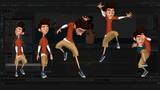










Learn the complete process of building a simplified FACS-based facial rig system using Maya and discover how to constrain motion-capture data shot with the iPhone ARKit system. Madhav Shyam, Creature Supervisor at Ghost VFX, kicks off the 10-hour workshop with the theory behind the key factors that contribute to making believable character performances. From there, Madhav jumps into building an intuitive rig system that drives the FACS shapes, while also demonstrating the process of constraining mocap data. Artists will learn how to render a range of motion animation using Maya and Marmoset Toolbag, and will complete the process by transferring both the animation and the rig system over to different types of characters.
This workshop is designed for intermediate-level artists who are looking to dive into the world of realistic facial performances. Project files are provided with this workshop, including the shapes required to build the rig system. For additional resources, artists can download the Free 3D Model Scan from 3dscanstore.com; additionally, 3dscanstore’s Gorilla Écorché 3d model is available for a small fee from their website.
By completing this workshop, artists will have a robust understanding of facial performance and a strong foundation from which to start building character rigs.
17 Lessons
In this opening lesson, Madhav Shyam lays out the core pillars of believable character performance: design and modeling, rigging, animation, and rendering. Using scan-based heads, interactive FACS-driven rigs, a blend of motion capture and hand-crafted animation, and careful lighting and rendering, Madhav demonstrates how these disciplines work together to create convincing, emotionally engaging characters suitable for professional production.
Duration: 23m 37s

In this first lesson, Madhav introduces the 3D head scan from 3D Scan Store used throughout the workshop and outlines his goal of building an accessible, production-ready facial rig. By focusing on blend shape-driven deformation with an intuitive control system, the rig can be quickly transferred across multiple character types while maintaining high-quality results.
Duration: 23m 10s

In this lesson, Madhav provides a manual, accessible approach to creating facial rigging systems for eyebrows using Maya's utility nodes and blend shapes. This hands-on method allows rigging Madhav to precisely control how joints drive facial deformations through visual assessment and iterative adjustment. The resulting setup gives animators intuitive controls for eyebrow expressions while maintaining the ability to further refine the system for production needs.
Duration: 31m 8s

In this lesson, Madhav uses manual node-based connections in his rigging work, successfully demonstrating how to build functional eyebrow, eye, and eyelid controls that will serve as the upper portion of a complete face rig. Using this approach, he cotinues to rig each part of the face, noting that viewers can use the project files for this workshop for reference and comparison.
Duration: 42m 5s

In this lesson, Madhav covers the essential middle-tier facial rigging components that work in conjunction with created eye controls. He applies the same node-based approach to these areas which can be replicated across the remaining facial features. While some secondary shapes (chin compress, nasolabial deepen, face crunch) are deferred to later refinement stages, the core facial control system is now substantially complete.
Duration: 39m 35s

In this lesson, Madhav adds lip and mouth controls to the facial rig, focusing on clean naming conventions, modular node setups, and regular testing to ensure reliability. With the core system in place, he sets the stage for the next refinements; introducing cheek controls, dimpler and stretch shapes, and corrective blendshapes to push the facial deformation to a higher level of quality.
Duration: 37m 46s

Continuing to work on the lips and mouth, Madhav identifies which features deserve dedicated controllers versus attribute-based controls. The workflow showcases iterative refinement, where shapes are tested, adjusted, and sometimes reorganized based on how naturally they perform, resulting in a cleaner, more animator-friendly facial rig.
Duration: 33m 51s

Wrapping up the lips and mouth area of the rig, Madhav provides a technical workflow for creating advanced corrective systems for realistic facial animation. He emphasizes that rigging is an iterative process requiring continuous testing and refinement, with problems often only revealing themselves during actual animation. The combination of automated corrective systems (condition nodes) and manual tools (shape editor, Delta Mush) provides flexibility to address both systematic and localized deformation issues, ultimately creating a functional facial rig ready for animation testing.
Duration: 34m 17s

This lesson provides an efficient method for adding dimensional control to facial rigs without creating excessive blend shapes. By combining wire deformers with blend shapes and using dummy joints to drive deformation curves, Madhav illustrates how to provide more nuanced facial control to animators, with rotation and depth adjustments, significantly enhancing the expressiveness and flexibility of facial animation rigs.
Duration: 32m 51s

In this lesson, Madhav continues to add secondary controls for nuanced animation. The setup requires weight painting and constraint management, and provides animators with the flexibility needed for realistic facial expressions. These temporary deformer-based solutions can later be optimized as blend shapes for production use.
Duration: 31m 55s

In this lesson, Madhav addresses performance optimization, additional deformation controls, and proper joint hierarchy. Madhav emphasizes the importance of balancing rig functionality with performance speed through strategic use of visibility toggles and organizational groups. With the rig now complete, the next phase involves testing with animation and motion capture data to identify any remaining deformation issues that may require corrective blend shapes or additional deformers.
Duration: 39m 12s

In this lesson, Madhav demonstrates how to integrate ARKit facial motion capture data into his custom facial rig control system. He breaks down how multiple mocap channels are mathematically remapped into clean, consolidated control axes while preserving accurate blend shape responses. By working incrementally, testing each section, diagnosing connection issues, and building reusable node networks, Madhav presents a clear, production-ready approach to facial animation retargeting that can be adapted to any motion capture source.
Duration: 36m 57s

In this lesson, Madhav continues working in Maya, breaking down a meticulous but reusable setup focused on clean node networks and carefully managed value ranges. He emphasizes that while this process is time-intensive, it only needs to be built once and can then be applied to different motion-capture performances.
Duration: 36m 53s

In this lesson, Madhav demonstrates how to integrate motion capture data with custom facial rigs in Maya, a process requiring technical rigging knowledge and artistic refinement, setting up the mathematical relationships between controllers, transferring mocap data, and then extensively cleaning and correction of the animation using graph editor manipulation and animation layers.
Duration: 43m 57s

After reuploading his capture data, Madhav tackles the complex workflow of adapting motion capture data with a custom facial rig, paying careful attention to timing offsets, corrective deformations, and proper rendering setup. Madhav's iterative process of refining animation, fixing technical issues, and optimizing deformation illustrates that professional-quality facial animation demands both technical expertise and artistic judgment.
Duration: 44m 33s

In this lesson, Madhav uses Maya and Wrap 3D for adapting humanoid facial rigs to non-human characters. Madhav's workflow demonstrates that convincing facial animation can be achieved on vastly different character designs without rebuilding the entire rig from scratch. The trick is having well-structured blend shapes and using corrective tools like Delta Mush to bridge the anatomical differences between the human 3D scan face to other human or non-human faces.
Duration: 45m 52s

In this final lesson, Madhav completes his workflow, demonstrating how a blend shape-based facial rig can be transferred across diverse characters, from humans to creatures. While technical problem-solving and iteration are required, especially for varied facial structures, careful setup and accurate intermediate blend shapes allow the rig to be reused efficiently, enabling expressive animation across multiple characters with less effort.
Duration: 46m 56s

Primary tools
For this workshop you’ll need:
Project Files
When you download these files, you'll gain access to the comprehensive facial-rigging pipeline showcased in this workshop, which can help you create professional character facial animations. Inside you'll find:
- Chapter-organized files – Folders set up for each lesson so you can follow along with the instructor's progress in each Maya scene
- 3D models & assets (.fbx) - Ready-to-use character models, including retopologized male heads and reference geometry for practicing your rigging techniques
- Video reference (.mov, .mp4) - Demos and examples of key rigging concepts and workflows to follow along with the project files
- Reference materials & guides - Everything from facial action code, head scans, and technical demos, to reference images for you to see the anatomy behind expressions
Skills Covered
Who’s this Workshop for?
This workshop is specifically designed for intermediate-level artists working in character animation, rigging, and facial performance who want to master realistic facial animation workflows. Character artists and animators seeking to integrate motion capture technology with traditional rigging approaches will find the lessons from Madhav Shyam particularly valuable.
Whether artists are working on cinematic sequences, character-driven narratives, or realistic digital humans, this workshop provides the technical foundation and practical knowledge needed to create compelling facial animations. Though this is a simplified process for building a facial rig system, it is encouraged that viewers have some level of basic Maya knowledge in order to get the most out of this workshop.
Learning Outcomes
By completing this workshop, artists will have developed a comprehensive understanding of FACS-based facial rigging and motion capture integration for professional character animation workflows.
Key skills include:
- How to build intuitive FACS-based facial rig systems using Maya's advanced rigging tools.
- How to constrain and process motion capture data captured with iPhone ARKit technology effectively.
- How to create believable character performances using theoretical principles and practical rigging techniques.
- How to render high-quality facial animation sequences using both Maya and Marmoset Toolbag.
- How to transfer completed rig systems and animations between different character types seamlessly.
- How to implement professional facial animation workflows for realistic digital character performances.


